30
Jun

What kind of future awaits the grid energy storage

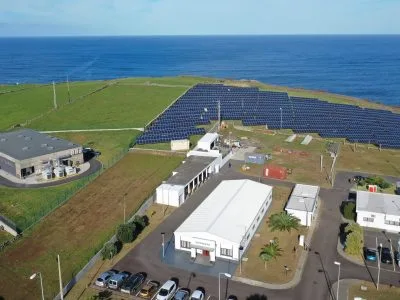
Decreasing price of the energy produced by wind and solar together with the need to retire many coal-fired power plants have contributed to the rapid growth of renewable energy generation. But renewables have some limitations like dependence on weather conditions and the challenges they meet to handle variances in demand during the day. This in turn raises the question about energy storage.

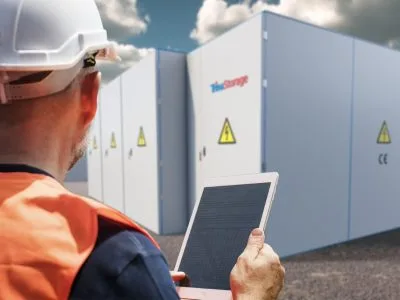
The two most popular types of storage are batteries and pumped storage hydropower. Pumped hydro is an old and proven technology, while batteries are still a new technology. On the other hand batteries are faster to implement and take just few months to be deployed compared to pumped storage hydropower that takes years to be completed.

Comparing the price per megawatt hour, pumped hydro ranges from $200/MWh to $260/MWh, and battery costs range from $350/MWh to $1000/MWh, but their cost is falling and according to reports by 2025 the cost of lithium-ion batteries will reach about $120/MWh.

Both technologies have their advantages. Batteries are able to provide fast response times and are better at delivering small amounts of stored energy over a short time at high power levels. Pumped hydro storage great for storing and releasing larger amounts of stored energy.

Read the original article

If you want to know more about this and other topics directly from end users of energy storage technologies join us at one of these annual events: The Energy Storage World Forum (Grid Scale Applications), or The Residential Energy Storage Forum, or one of our Training Courses.

LATEST ARTICLES

Battery Storage for Commercial & Industry

Powerful battery storage offers many advantages in terms of saving electricity costs and a reliable power supply. With this technology, companies retain control of their energy supply and costs. The battery storage system is charged when energy is cheaply available and it supplies the stored electricity when prices are at their highest. With applications such…

Read More

Future energy predictions: Growth of flexibility and grid forming

  It is well known that COVID-19 has caused low energy demand and the growth of renewable energy across Europe. Now, Andrew Tang, Vice President for Energy Storage at Wärtsilä, predicts this will result in swift action to build better grid resiliency. The share of renewable power across Europe has skyrocketed over the last six…

Read More

Energy Storage Systems: the role of an Integrator

Simplifying BESS deployments by mastering their associated risks With the introduction of Battery Energy Storage Systems ‘BESS’, a new role has been created on the value chain. It is the role of a BESS integrator. The role of an integrator can be misunderstood at times or blended with other roles at other times. This is…

Read More

★REVIEWS

[gdlr_testimonial columns="1" type="static" style="box-style"]
[gdlr_tab title="Sales Director" position="S&C"]“Probably the most interactive and well organized storage event on the calendar.”
★★★★★[/gdlr_tab]

[gdlr_tab title="TLC & SCADA Manager" position="FRI-EL"]“Great topics, competent speakers, good networking: keep it like that.”
★★★★★[/gdlr_tab]

[gdlr_tab title="Expert Technical & Governance" position="Elia"]“High scientific content, well targeted, perfect organization.”
★★★★★[/gdlr_tab]

[gdlr_tab title="Manager" position="ATL"]Excellent networking event. The sponsorship was well worth it.”
★★★★★[/gdlr_tab]
[/gdlr_testimonial]

View More

x